

The Studio and the Setup
Supplies, mediums, priming a raw panel, and choosing brushes.
MasterDemos
If you're a student you can get 30% off with code STUDENTARTIST and your school email.


Discover how Maddy gathers the references behind her paintings
In this course, Maddy shows you how she finds, photographs, and selects the reference photos behind her paintings.
You will spend a day in the field with her, then sit down at the computer as she sorts through everything she brought home.


Maddy covers her camera gear, model release forms, and why she shoots every reference herself.

Maddy traces a career built on knocking on doors and explains why painting from your own photos removes any copyright risk.

Maddy explains how she gets written permission from anyone whose animals, property, or likeness will appear in a painting.

Maddy walks through the progression from a phone to her Canon 90D and telephoto lens, and explains why the setup should stay simple.

Maddy shares her minimal editing approach, using basic exposure and contrast adjustments rather than professional software.

Maddy visits her family's dairy farm and photographs a place she has known her whole life.

Maddy visits a family dairy that has not run in forty years and explains why a personal connection deepens a painting.

Maddy adjusts for harsh afternoon light and steps back to capture the barn, milkshed, and silo in a single frame.

Maddy photographs a neighboring farm as a visual note for a painting that may not happen for years.

Maddy circles a hay barn to find golden bales set against deep shadow and an old hay wagon worth including.

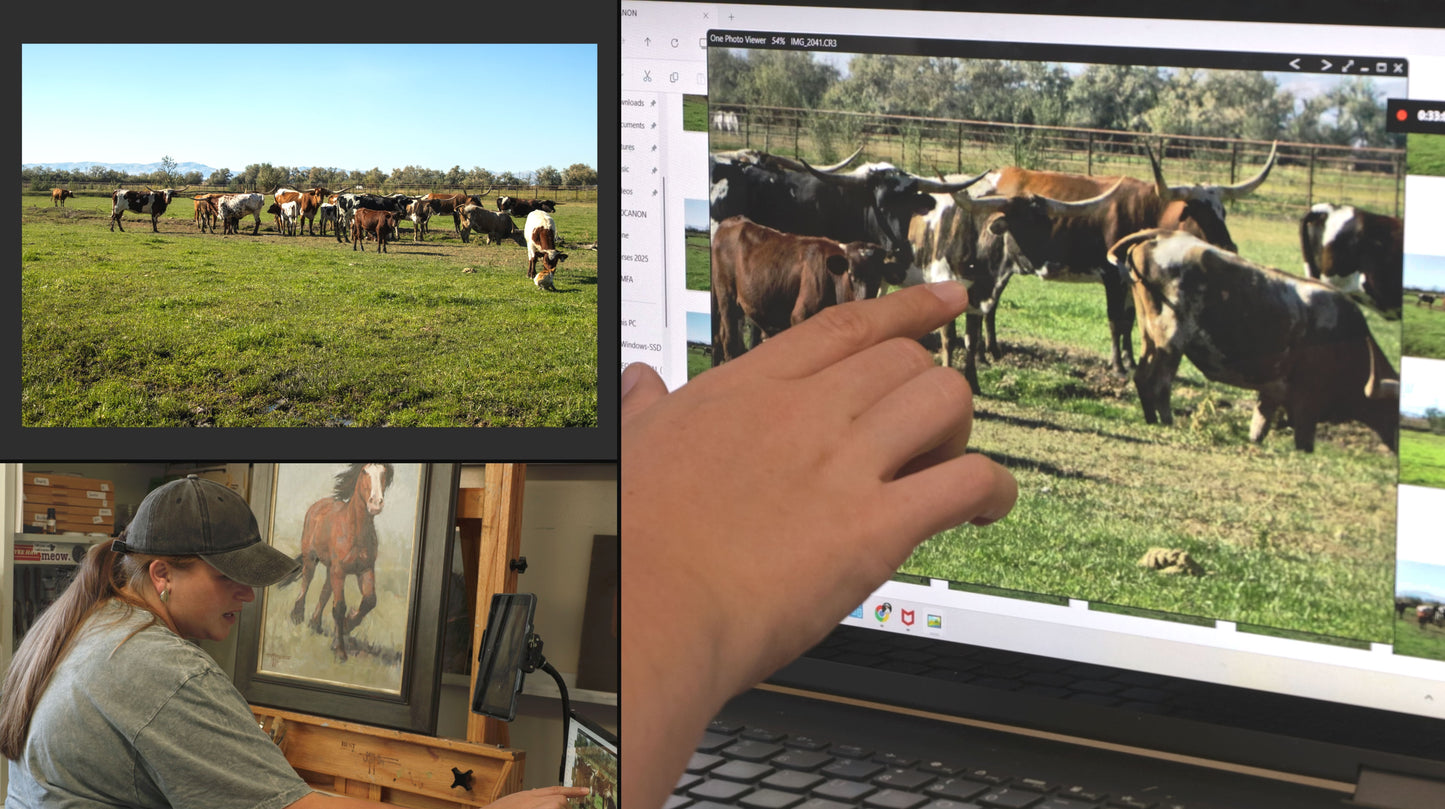
Maddy heads to Wayment Longhorns and works the light around a herd that will not hold still.

Maddy explains how to introduce yourself to a landowner, share your intent, and help them see the value in what they have.

Maddy introduces longhorn rancher Kory Wayment, who shares the breed's history and what he looks for when buying an animal.

Maddy works the light around a moving herd, watching for the silhouettes, shadows, and moments worth capturing.

Maddy sorts through the full shoot at her computer, keeping the frames worth painting and deleting the rest.

Maddy begins culling the day's photos, keeping the strong shapes and deleting awkward poses and blurred frames.

Maddy reviews the recurring theme of the shoot and identifies which cow and calf pairings would translate well into paintings.

Maddy looks for the painting hidden inside a herd photo and explains what makes a portrait worth keeping.

Maddy covers external drives, folder organization, and sharing finished shoots with the ranchers who hosted her.

Maddy closes with the case for experiencing your subject firsthand and starting with the places you already know.

Purchase Maddy's full oil painting course and this photography course comes with it, free.
As a special launch promotion, this photography course is included free when you purchase Painting the West.
Painting the West follows Maddy as she takes a raw panel all the way to a finished painting, covering her priming method, her sketchbook warmups, and the color studies behind her muted palette. The reference she paints from is the cow and calf she photographs in Part 3 of this course.

Supplies, mediums, priming a raw panel, and choosing brushes.

Quick studies that train you to draw shapes rather than subjects.

Chroma, pigment codes, and the color studies behind her muted palette.

Aspect ratio, imprimatura, and a full value study before any color.

Mixing the full palette and blocking the whole painting in wet.

Texture, detail, and finishing over dry paint, through to the signature.

A printable guide covering Maddy's gear, permissions, and what she looks for on a shoot



Madelynn Mutter is a Western artist known for capturing the grit and quiet moments of rural American life in oil. She calls her style realistic impressionism, building paintings from thick paint, soft edges, and a deliberately muted palette that feel true to the ranches and families they come from.


